The Open Road, Reimagined: How Flexible Mobility and Digital Platforms Are Reshaping European Travel
Introduction: A New Way to Explore Europe
The way people experience Europe is undergoing a quiet yet profound transformation. For decades, traditional tourism meant fixed tour groups, rigid public transit timetables, or the high expense of standard car rental agencies. Today, modern travelers expect flexibility, independence, and authenticity. Whether someone wants to carve through the winding tarmac of the Alps on two wheels, weave through historic Mediterranean coastal towns on a scooter, or take a spontaneous weekend road trip across national borders, mobility needs have become far more dynamic.
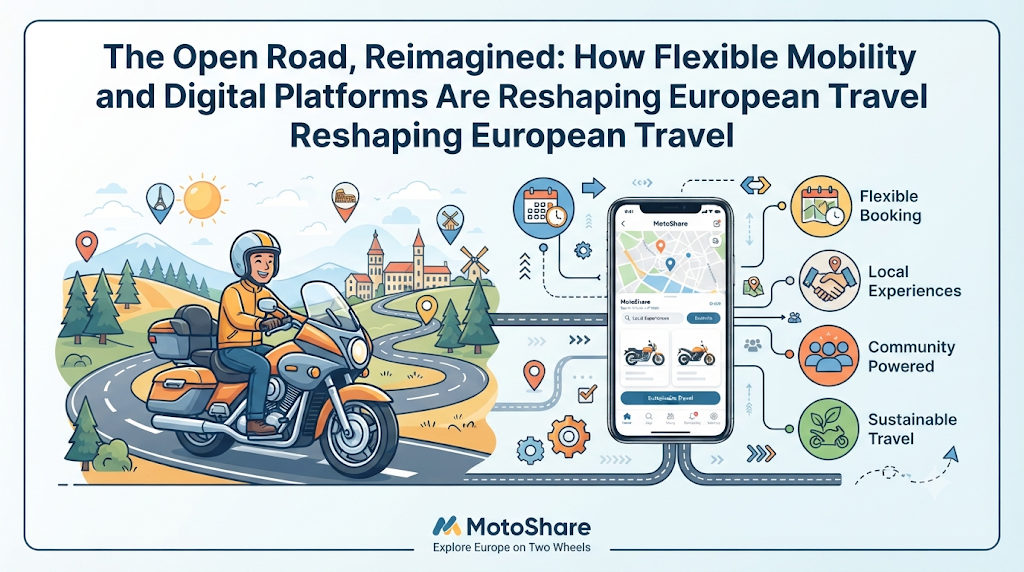
This shift goes beyond traditional tourism. Everyday mobility, weekend getaways, and alternative commuting rely heavily on accessible, flexible vehicle options. Yet, finding the right vehicle in an unfamiliar location has historically involved friction—navigating fragmented local inventories, opaque pricing structures, and outdated booking procedures. Enter modern digital solutions like MotoShare, which bridge the gap between people seeking freedom on the road and vehicle owners or local operators looking to share their assets. By addressing the modern desire for flexible travel, digital platforms are changing how individuals move across Europe and how businesses manage their fleets.
The Travel Experience Starts With the Right Vehicle
No two journeys are alike, and the success of a trip often hinges on choosing the appropriate transport. The ideal vehicle depends heavily on the destination, the length of the journey, personal budget, and individual riding or driving preferences.
Consider a solo traveler navigating the narrow, cobbled alleys of an old European city. A heavy sedan or even a standard rental car is impractical here, trapped in traffic and burdened by high parking fees. Instead, a nimble scooter offers the perfect blend of efficiency and urban freedom. Conversely, a group of friends planning a cross-country tour through scenic countryside highways will look for a reliable car with ample storage space. Meanwhile, motorcycle enthusiasts traveling through mountain passes seek an entirely different experience—one defined by engagement, balance, and a direct connection to the road.
Matching the traveler with the right vehicle category unlocks a more personalized, enjoyable journey. However, the logistical reality of securing that vehicle can often feel like an unnecessary hurdle.
Finding a Motorcycle Rental in an Unfamiliar Location
When travelers decide they want to explore a region on two wheels, the search usually begins online with queries looking for a motorcycle rental near me. In the past, this meant calling numerous local garages, deciphering foreign language websites, or hoping that a walk-in rental shop had a suitable bike available upon arrival.
Today, digital platforms streamline this discovery process. Riders can compare local options based on exact geographical location, filter by engine displacement or bike style (such as adventure, cruiser, or touring), check real-time availability, and evaluate transparent rental conditions before committing. This shift from guesswork to digital transparency allows travelers to secure their ride in advance, ensuring that their arrival at a destination is met with excitement rather than logistical anxiety.
Before Booking: Questions Every Rider Should Ask
Even with modern digital tools simplifying the search, renting a vehicle requires careful preparation. Before confirming any reservation, riders should clarify several practical considerations to ensure a smooth journey:
- Vehicle Condition and Maintenance: What is the age and service history of the motorcycle? Are there any pre-existing scratches or mechanical notes?
- Rental Duration and Mileage Limits: Is the rental calculated on a daily basis, and are there restrictions on how many kilometers can be driven without incurring extra fees?
- Licensing Requirements: Does the local jurisdiction or vehicle class require a specific motorcycle endorsement (such as an A, A1, or A2 license in Europe)?
- Insurance and Excess: What level of coverage is included, and what is the financial liability (excess/deductible) in the event of damage or theft?
- Security Deposits: How much is the refundable damage deposit, and when will it be returned following the vehicle inspection?
- Pickup and Drop-off Arrangements: Are there flexible key-handover options, or must the vehicle be collected during strict business hours?
- Additional Charges: Are helmets, riding gear, phone mounts, or panniers included, or do they carry separate daily rental fees?
Addressing these questions beforehand protects both the renter and the provider, establishing clear expectations from the outset.
Rental Costs: What Determines the Final Price?
Understanding motorcycle rental cost Europe-wide requires looking at a combination of market variables. Unlike standardized retail goods, vehicle rental pricing fluctuates based on several distinct factors:
- Vehicle Category and Engine Size: A small scooter or commuter motorcycle naturally costs less to rent than a high-end adventure tourer or premium cruiser equipped with advanced electronics and luggage systems.
- Geographical Location: Rental prices reflect local demand and operational costs. Popular tourist hubs and major metropolitan areas often feature higher rates than quieter regional towns.
- Seasonality: Europe experiences distinct tourism cycles. Summer months, long holiday weekends, and peak touring seasons drive up demand, whereas shoulder and winter seasons often feature more competitive pricing.
- Rental Duration: Many providers offer tiered pricing where longer rental periods (such as a multi-week booking) reduce the average daily cost.
- Insurance Tier and Optional Services: Comprehensive insurance packages, roadside assistance coverage, and add-ons like riding apparel or GPS units influence the final checkout price.
Transparency regarding these cost components helps travelers budget effectively while ensuring providers are fairly compensated for maintaining safe, road-ready vehicles.
A Different Rental Model: Connecting Owners and Travelers
While traditional rental agencies have long dominated the market, a peer-to-peer approach has emerged as a powerful alternative. Peer to peer motorcycle rental Europe networks operate on a community-driven model, connecting private motorcycle owners whose bikes spend most of the year parked in garages with travelers and locals eager to ride.
This decentralized model expands the availability of vehicles in regions where traditional rental fleets are scarce. It also transforms motorcycles from depreciating assets into active resources, creating a mutually beneficial ecosystem where owners can offset maintenance costs while riders gain access to a diverse, well-loved selection of motorcycles.
The Owner’s Perspective: Providing an Opportunity for Idle Vehicles
For many enthusiasts, owning a motorcycle is a passion, but machines often sit idle during wet winter months or busy work weeks. Choosing to rent out my motorcycle allows owners to turn private property into a productive asset without relinquishing long-term ownership.
Modern digital platforms make this process manageable by providing structured frameworks for owner participation. Owners can set their own availability calendars, review renter profiles and licensing credentials, coordinate convenient pickup times, and establish clear terms of use. Secure messaging systems and integrated booking agreements ensure that both parties remain aligned, fostering a sense of accountability and trust throughout the transaction.
Expanding Beyond Motorcycles
Although two-wheeled touring captures a unique spirit of adventure, flexible mobility encompasses a much broader spectrum. Many travelers and urban commuters require different vehicles depending on the specific demands of their trip.
Platforms that facilitate peer-to-peer and professional rentals frequently expand into multi-modal transport. For instance, individuals looking to list my car for rent can utilize similar digital infrastructure to monetize their passenger vehicles when not in use. Simultaneously, urban explorers and tourists frequently look for traditional car rental, bicycle rental, and scooter rental options. By accommodating multiple vehicle categories under one digital umbrella, the modern mobility market provides a unified solution for diverse travel requirements.
Behind Every Booking: The Operational Work Rental Businesses Handle
While travelers experience the excitement of the open road, professional vehicle rental operators face a demanding operational reality. Behind every confirmed reservation lies a complex administrative workflow.
Rental businesses must constantly balance vehicle availability across multiple channels, record and verify detailed customer identification and licensing data, manage incoming payments and security deposits, track scheduled maintenance intervals, and process seamless vehicle check-outs and returns. Maintaining accurate fleet records is essential to prevent double-bookings, ensure regulatory compliance, and keep vehicles safe and profitable.
How Rental Software Can Reduce Administrative Work
As rental fleets grow, manual spreadsheets and fragmented communication channels quickly become unsustainable. To maintain efficiency, operators increasingly rely on specialized digital tools designed to streamline daily operations.
The adoption of free vehicle rental management software and free car rental software has democratized access to enterprise-grade organizational tools. These platforms offer centralized reservation tracking, automated customer management, real-time availability updates, and digital document storage. By automating repetitive administrative tasks, rental operators can reduce human error, save valuable administrative hours, and focus on delivering exceptional customer service.
One Platform, Different Rental Requirements
Different vehicle categories demand tailored operational features. The logistical needs of a motorcycle rental fleet differ significantly from those of a multi-car agency or an urban micro-mobility provider.
For example, specialized bike rental software must account for frame sizes, accessories, and high-turnover daily rentals, whereas scooter rental software often integrates with location-tracking or rapid-deployment models. Similarly, automotive fleets require tracking for mileage intervals, comprehensive insurance documentation, and periodic servicing schedules. Flexible digital platforms adapt to these varied fleet categories, ensuring that operators of all sizes have the right tools for their specific operational workflow.
What Makes a Vehicle Rental Booking System Useful?
Whether serving an individual motorcycle owner or a large regional fleet, an effective vehicle rental booking system relies on several core pillars of functionality:
- A Clear Booking Journey: A streamlined, intuitive interface that guides the user from vehicle selection to secure payment without unnecessary friction.
- Accurate Availability Information: Real-time calendar syncing that prevents double-bookings and ensures displayed vehicles are actually ready for deployment.
- Transparent Pricing: Upfront breakdown of rental fees, insurance options, mileage limits, and potential deposits so users encounter no unexpected charges at checkout.
- Automated Booking Updates: Instant confirmations, reminder notifications, and digital status changes that keep both renters and operators informed.
- Convenient Communication Channels: Built-in messaging tools that allow renters to ask questions and providers to share pickup instructions effortlessly.
Building Trust in Europe’s Vehicle Rental Marketplace
In any sharing economy or rental marketplace, trust is the foundational currency. Because physical assets of significant value are exchanged between relative strangers, transparency is paramount.
Building and maintaining this trust requires clear, honest listings, unambiguous rental policies, accurate vehicle photography and descriptions, responsible communication, and realistic expectations on both sides. Whether dealing with individual peer-to-peer lenders or professional rental companies, users need confidence that the vehicle described matches the vehicle delivered, and that support is available if unexpected situations arise.
The Road Ahead for Flexible Vehicle Rentals in Europe
The European mobility landscape continues to evolve, driven by shifting consumer preferences and technological innovation. However, realizing the full potential of flexible rentals requires navigating practical challenges.
Regional availability varies significantly between bustling metropolitan centers and remote rural destinations. Local regulatory requirements, cross-border travel rules, and seasonal demand fluctuations require platforms and operators to remain adaptable. Ultimately, the long-term success of flexible vehicle rentals depends on reliable service quality, robust safety standards, and a continuous commitment to improving the user experience.
Conclusion: Making Vehicle Rental More Accessible
The future of travel relies on breaking down barriers between people and the mobility they need. By uniting the perspectives of modern travelers seeking adventure, vehicle owners looking to share their assets, and rental operators striving for operational efficiency, digital mobility ecosystems create a more connected Europe. Through platforms like MotoShare, finding the right ride becomes a seamless part of the journey, supporting more accessible, flexible, and organized travel for everyone on the road.
Leave a Reply