How Direct Booking and Smart Floor Management Transform Front-of-House Operations
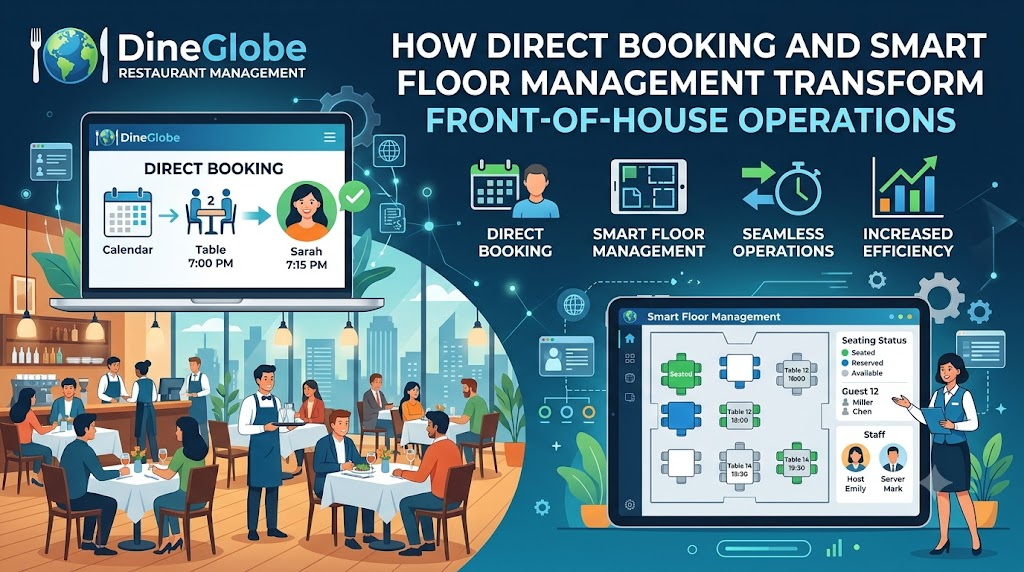
Managing a busy dining room requires a careful balance between guest hospitality and precise operational coordination. During peak dinner service, a host stand often juggles ringing phones, party arrivals, walk-ins seeking available bar seats, and tables lingering longer than their allotted booking window. When front-of-house teams rely on disjointed paper reservation books or disconnected digital systems, bottlenecks quickly emerge. The result is delayed seating times, stressed floor staff, double-booked sections, and missed revenue opportunities.
Deploying comprehensive restaurant reservation software has shifted from an optional digital upgrade to an essential operational backbone. For independent operators and growing hospitality groups alike, modern front-of-house tools connect digital guest acquisition directly to the physical dining floor. By unifying reservation intake, real-time table assignments, waitlists, and walk-in flows into a single system, restaurants preserve revenue, eliminate friction at the reception desk, and maintain total ownership over guest relationships.
The Hidden Costs of Fragmented Front-of-House Management
A restaurant’s profitability depends heavily on table turns, seat utilization, and labor efficiency. Yet many venues still operate with fragmented tools that disconnect online guest reservations from front-of-house reality.
Common operational breakdowns include:
- Third-Party Marketplace Dependence: Many third-party reservation portals charge recurring commissions or per-cover fees for every booked guest. Over time, these aggregator fees erode operational margins while severing the restaurant from direct customer communication.
- Double Bookings and Capacity Mismatches: When reservation intake does not reflect real-time table turnover or dynamic combinations, hosts frequently overcommit tables, leaving arriving guests waiting past their reservation time.
- Unmanaged Walk-In Traffic: High-volume walk-in traffic during peak hours often overwhelms front desks when there is no structured queue or visibility into which tables will vacate next.
- Manual Seating Errors: Relying on paper charts or memory to track table status makes it difficult to enforce seating buffers, leaving servers overloaded in some sections while others sit idle.
Solving these challenges requires moving away from patchwork setups and implementing a connected management infrastructure.
Core Capabilities of Modern Table and Booking Platforms
A robust reservation setup connects every point of interaction—from the moment a diner decides to book to the moment their bill is closed.
1. Direct Online Bookings Without Intermediaries
Relying on a direct restaurant booking system allows hospitality businesses to take bookings through their own dedicated channels. Rather than routing diners through discovery aggregators, an online restaurant booking system integrates directly onto the venue’s custom booking page.
This model offers two critical advantages:
- Direct Relationship Ownership: The restaurant retains full access to guest history, dietary preferences, and contact details without intermediary restrictions.
- Autonomous Policy Control: Managers can adjust turn-time rules, minimum party sizes, seating cutoffs, and deposit or cancellation policies directly based on daily demand.
2. Intelligent Floor Plans and Physical Table Allocation
Reservation numbers mean little if they do not match the real-world geometry of the dining room. Specialized restaurant floor plan software bridges this gap by mapping digital reservations directly to physical tables.
Advanced systems manage dynamic setups such as:
- Combined Tables: Linking adjoining two-tops into a four- or six-top for larger parties without creating ghost vacancies.
- Reservation Holds & Seating Buffers: Automatically blocking out clean-up and transition intervals between party seatings so arriving guests are not left waiting at the entrance.
- Real-Time Seating Optimization: Visual indicators showing occupied, reserved, and closing tables to maintain even server workloads across stations.
3. Integrated Waitlists and Walk-In Management
Even fully booked restaurants encounter no-shows or early departures. Purpose-built restaurant waitlist management software enables front-of-house teams to quote accurate wait times based on live table turnover.
Combined with flexible restaurant walk-in management software, reception staff can instantly register spontaneous arrivals, track party sizes, and notify waiting diners the moment a table clears. This eliminates crowded entryways and converts foot traffic into seated revenue during busy weekends.
Centralizing Service with Purpose-Built Host Stand Software
The reception desk is the command center of any dining venue. Equipping host teams with responsive restaurant host stand software replaces cluttered paperwork with a single, clear operating interface.
With a unified operational screen, hosts and managers can:
- Monitor upcoming reservations alongside current table occupancy at a glance.
- Track guest arrivals, seatings, and departures in real time.
- Distribute parties evenly across service sections to prevent kitchen bottlenecks.
- Update table availability dynamically as walk-in parties arrive or reservations conclude.
Guest Booking / Walk-In Arrival
               │
               ▼
   [ Central Host Stand View ]
   ├── Direct Booking Policies
   ├── Dynamic Waitlist Management
   └── Live Floor Plan & Buffers
               │
               ▼
  Optimized Table Allocation & Turn
Transforming Daily Service with DineGlobe
For operators seeking an integrated alternative to fragmented platforms and costly aggregator commissions, DineGlobe provides an all-in-one hospitality management solution. Designed specifically for independent venues, multi-lingual teams, and growing dining concepts needing scalable restaurant reservation software for small restaurants, DineGlobe unifies every stage of front-of-house operations.
Connected Operations in One Place
DineGlobe links guest-facing reservations directly to real-time dining room logistics:
- Direct Online Reservations: Guests book tables through a dedicated, branded restaurant page, eliminating dependency on third-party dining marketplaces.
- Live Table and Floor-Plan Coordination: Its built-in restaurant table management software uses physical table allocations, combined table configurations, reservation holds, and seating buffers to prevent double bookings and keep bookings aligned with physical dining room capacity.
- Front-of-House Control: The centralized host interface gives reception staff comprehensive oversight of upcoming bookings, active arrivals, seated diners, and table occupancy across shifts.
- Walk-In and Waitlist Coordination: Reception teams can register walk-ins, track party visits, estimate wait times, and offer newly vacated tables to waiting guests seamlessly.
- Self-Service and International Support: DineGlobe incorporates guest self-service links, confirmation codes, role-based staff permissions, operational reporting, and a multilingual interface available in English, Japanese, and Arabic.
To assist venues in evaluating and upgrading their service workflows, DineGlobe currently provides a free restaurant reservation system during its pilot program, granting restaurants full access to its booking, table management, waitlist, and operational capabilities without upfront software hurdles.
Best Practices for Optimizing Dining Room Operations
Investing in the right software is only half the battle; maximizing its impact requires deliberate front-of-house operating procedures.
- Define Realistic Table Turn Times by Party Size: Avoid assigning uniform 90-minute buffers to all parties. Set realistic dining durations (e.g., 60 minutes for parties of two, 90 minutes for parties of four, and 120 minutes for large parties) to maximize floor capacity.
- Enforce Dynamic Seating Buffers: Configure automatic 10- to 15-minute buffers between reservations on the same table. This accommodates table cleaning, resetting, and slight dining overruns without delaying subsequent guests.
- Encourage Direct Bookings Across Marketing Channels: Add direct booking links to your social profiles, Google Business Profile, and official website. Guiding guests through your own booking channels keeps customer data in-house and avoids aggregator fees.
- Leverage Real-Time Guest Communication: Utilize automated booking confirmations and self-service cancellation links. Providing guests with a straightforward way to modify or release their reservations substantially reduces last-minute no-shows.
Frequently Asked Questions
What is the primary difference between a direct restaurant booking system and a third-party marketplace?
A direct restaurant booking system processes reservations through a restaurant’s own dedicated channels, allowing the business to retain guest data, customize booking rules, and avoid per-cover marketplace commissions. Third-party marketplaces list venues on a shared consumer portal, often charging recurring fees for bookings while controlling the primary customer relationship.
How does restaurant floor plan software prevent double bookings?
Restaurant floor plan software ties every confirmed reservation to specific physical tables and scheduled seating timeframes. By accounting for table combinations, minimum party requirements, and automated turnaround buffers between seatings, the platform prevents the system from confirming reservations beyond real-world seating capacity.
Can restaurant reservation software accommodate both reserved tables and walk-in diners?
Yes. Modern systems integrate walk-in management and waitlist queues directly into the host interface. Hosts can log walk-in parties alongside booked reservations, track real-time turnover across dining sections, and assign newly available tables without disrupting upcoming scheduled bookings.
How do seating buffers improve front-of-house efficiency?
Seating buffers introduce a short, automated gap between consecutive bookings on the same table. This window provides front-of-house staff with the time needed to bus, sanitize, and reset the table, preventing arriving diners from waiting in entryways when previous guests linger slightly past their booking.
What should small and independent restaurants look for in reservation software?
Small and independent venues should prioritize direct booking autonomy, intuitive table and floor-plan coordination, centralized host stand visibility, and predictable operating costs. Platforms offering scalable access—such as pilot programs or direct management software—allow growing restaurants to organize front-of-house workflows without enterprise-level complexity.
Take Control of Your Dining Operations
Delivering a seamless dining experience requires precision from the moment a reservation is placed to the final table reset. Relying on disconnected tools or fee-heavy third-party networks drains time, compromises guest relationships, and creates avoidable service bottlenecks at the front desk.
By implementing dedicated restaurant reservation software, venues gain complete visibility over their floor plan, protect their profit margins with direct online bookings, and equip host teams to handle busy services with confidence. Explore how DineGlobe connects bookings, table allocation, waitlists, and guest arrivals—and start streamlining your front-of-house service today.
Leave a Reply