Infrastructure at the Edge: Scaling Distributed Asset Sharing and Mobility Pipelines
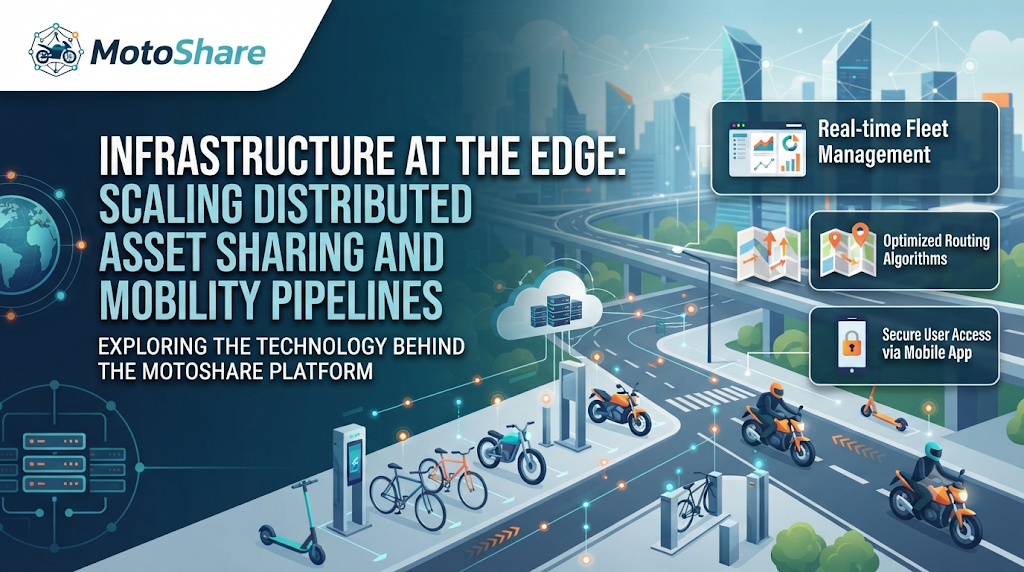
In modern infrastructure engineering, we spend considerable time eliminating single points of failure, decoupling monolithic services, and optimizing resource utilization across distributed clusters. Yet while digital infrastructure has evolved toward containerized orchestration and elastic scaling, physical logistics and transportation infrastructure have historically remained tethered to rigid, centralized legacy pipelines. Acquiring a vehicle for enterprise transit or temporary travel has traditionally meant interfacing with bloated corporate monopolies, opaque pricing algorithms, and high operational overhead.
Today, a parallel paradigm shift is redefining physical mobility across the United States. Through distributed peer-to-peer marketplaces, underutilized physical hardware assets are being indexed into dynamic, elastic sharing pools.
The Query Pipeline Starts With a Functional Constraint
When an engineer, developer, or traveler initiates a search for temporary transportation, the event is rarely triggered by brand loyalty or a desire to visit a traditional brick-and-mortar storefront. Instead, the transaction is driven by immediate execution parameters and functional constraints.
Consider a systems engineer taking a weekend break from the terminal to evaluate geographic routing topologies on a two-wheeled node. For that deployment, agility, low mass, and direct environmental feedback are paramount—requiring a motorcycle. Contrast that scenario with a distributed engineering team arriving at a regional logistics node with hardware, diagnostic gear, and multiple operators; their operational requirements dictate a four-wheeled platform with high payload capacity and robust safety margins. Meanwhile, a commuter navigating dense urban municipal grids prioritizes low-footprint transit and efficient parking algorithms, making an electric or gas scooter the optimal choice.
This functional diversity explains why search telemetry spans distinct vectors. While an enthusiast might query motorcycle rentals near me for weekend transit, a distributed team planner will execute searches for car rentals near me, and an urban commuter might look into scooter rentals near me for localized micro-mobility.
System Architecture: How Peer-to-Peer Mobility Networks Operate
To understand how modern vehicle sharing achieves scale without relying on massive centralized capital expenditures, we must analyze its underlying distributed architecture. Traditional rental agencies operate on a centralized provisioning model—massive physical lots filled with homogenous inventory units managed by legacy software. Peer-to-peer marketplaces replace this bottlenecked model with a distributed node network, connecting everyday asset owners directly with verified end-users.
The provisioning workflow initializes when a node owner publishes structured telemetry data: accurate hardware specifications, high-resolution visual assets, maintenance history logs, and strict operational constraints. On the demand side, users execute filtered queries based on geographic bounding boxes, temporal availability windows, and vehicle class parameters. Once a state match is achieved, transparent booking protocols execute the terms of engagement.
Because these transactions involve independent physical nodes rather than uniform commercial fleets, several system checks must execute prior to state handover:
- Data Integrity and Listing Accuracy: Hardware specifications and telemetry images must accurately reflect the node’s physical state to prevent runtime failures at handover.
- Temporal Synchronization: Calendar protocols must eliminate race conditions and double-booking overlaps across concurrent requests.
- API-Driven Communication Channels: Direct messaging layers allow operators to query owners regarding undocumented operational quirks or vehicle behaviors.
- Credential Verification Engines: Identity and licensing verification pipelines ensure users hold valid regulatory endorsements, particularly for motorized two-wheelers.
- Risk Mitigation Protocols: Comprehensive insurance frameworks establish hard boundaries for liability and fault domains.
- State Inspection Handover: A physical walkthrough establishes a shared baseline of the node’s initial wear state prior to route execution.
Through peer-to-peer motorcycle rental and peer-to-peer car rental protocols, the sharing economy optimizes capital efficiency, transforming dormant physical assets into active network resources.
Evaluating Transport Nodes: Cars, Motorcycles, and Scooters
Matching the correct transport category to an operational itinerary requires evaluating performance constraints, environmental factors, and payload capacities.
Four-Wheeled Infrastructure for Heavy Workloads
For multi-passenger transit, long-distance highway routing, and high-payload requirements, automobiles remain the baseline standard. They provide environmental isolation, structural safety, and predictable long-haul endurance.
Two-Wheeled Agility for Individual Transit
For solo transit and leisure excursions, motorcycles offer high power-to-weight ratios and minimal spatial footprints. However, they demand strict adherence to environmental monitoring (weather APIs/conditions) and verified operator proficiency.
Urban Micro-Mobility via Scooters
In dense municipal centers, scooters provide high-efficiency short-distance transit. Their lightweight build bypasses traffic bottlenecks, provided operators maintain compliance with local transit codes and safety gear requirements.
A Regional Case Study: Logistics in Hilton Head Island
To observe how these decentralized networks function in a specific geographic cluster, consider Hilton Head Island, South Carolina. Characterized by resort corridors, recreational greenways, and seasonal traffic spikes, the region demands adaptive transit solutions.
A family or engineering team operating within the resort zone typically deploys a car rental Hilton Head Island solution to manage group logistics, equipment transport, and multi-stop itineraries. Conversely, an individual looking to optimize transit efficiency along coastal routes might query a motorcycle rental Hilton Head Island node. Both use cases rely on validating licensing credentials, inspecting maintenance logs, and ensuring adherence to state-specific safety statutes.
Note: All search outcomes depend entirely on real-time node availability and verified local inventory rather than static corporate guarantees.
Pre-Flight Checklist: Validating a Rental Agreement
Before committing state changes to a vehicle-sharing agreement, users should run through a rigorous validation checklist:
- Does the temporal availability window match the execution timeline without forcing bottlenecked returns?
- Do the asset descriptions and telemetry photos match the physical node?
- Is the pricing matrix fully transparent, with zero hidden execution fees?
- Are there mileage caps or geographical fencing restrictions?
- What are the fault boundaries and coverage limits defined by the insurance policy?
- What authentication credentials (licenses, IDs) are required at handover?
- What are the exception handling rules for cancellations and deposits?
- What is the escalation path if a mechanical exception occurs mid-route?
The Supply Side: Monetizing Underutilized Hardware
Vehicle sharing is a bidirectional architecture. For the typical household, cars and motorcycles remain in an idle state for the vast majority of their lifecycle—accumulating depreciation, insurance overhead, and maintenance costs while parked.
Exposing an underused asset to a marketplace transforms a static financial liability into an active revenue-generating node. For enthusiasts who only utilize their machines intermittently, choosing to rent out my motorcycle allows them to offset maintenance costs while sharing their hardware with fellow riders. Similarly, property owners who list my car for rent turn a driveway asset into a productive local utility.
As independent operators scale from a single asset to micro-fleets, administrative complexity increases. Managing booking calendars, tracking maintenance schedules, handling customer data, and maintaining compliance documentation requires robust software tooling. Consequently, operators frequently search for free car rental software to streamline their management overhead. When evaluating such tooling, operators must audit security protocols, verify feature tier restrictions, and ensure clean API integrations with existing workflows.
Trust and Marketplace Integrity
The success of any peer-to-peer distributed network rests on cryptographic and cultural trust. Transparent pricing engines, automated identity verification, honest node descriptions, and robust insurance frameworks are essential to maintaining ecosystem liquidity. When platform integrity is enforced, vehicle sharing transitions from an experimental concept into a dependable pillar of modern infrastructure.
The Horizon of Decentralized Mobility
As digital workflows and consumer preferences continue to evolve, American transportation is moving toward greater flexibility, smarter discovery algorithms, and optimized asset administration. By connecting independent hardware owners with individuals requiring temporary mobility, platforms like MotoShare provide a scalable, community-driven alternative to legacy rental monopolies—optimizing how we move across the country.
Leave a Reply